The Strength of the Wolf

Sometimes, 1 + 1 = 3

Seriously!

In life, there are so many instances where the whole is greater than the sum of its parts.

For example, jelly is just OK by itself – so is peanut butter. Put them together? It’s a whole new thing! And the combination of the two produces something better than either component by itself. I tried thinking of a few other examples:

• Vanilla ice cream (boring – sorry!) and hot fudge (too rich). Put them together? Way more delicious than any component by itself.

• Dual-threat quarterbacks. Ironically, being good at rushing opens up the passing game since defenses have to account for both. Talent at both running and passing makes a quarterback especially dangerous, as one skill enhances the other.

• Music Orchestration. Imagine your favorite songs without drums or beats. Then think about the drum tracks without music. When put together, aural magic happens.

Point being, the “1 + 1 = 3” phenomenon illustrates how collaboration and synergy can create outcomes greater than the sum of individual contributions. There are some very important applications of this principle in our career journeys. I’ll split them up into two categories: Team applications, and Individual applications.

Team Principle Application:

I came across a profound quote the other day from the Jungle Book: “The Strength of the Pack is the Wolf, and the Strength of the Wolf is the Pack.”

When you think about this quote, a similar relationship to the “1 + 1 = 3” phenomenon is at play. The individual enhances the team – the team enhances the individual. In this way, our inter-dependencies allow us to do more and go farther together than we could as individuals.

Consider how each of you have unique gifts, aptitudes, and talents. When working together, you can learn from one another. You can also help each other in unique ways to enhance your performance as a team. For example, let’s say one team member is really good at writing. If the others in the group all learn from that one person, then we now have a team of good writers.

In that way, the wolf (the good writer) acts as the strength for the pack (average writers), in turn making the pack stronger (better at writing), enhancing the support for the wolf. Can you see the principle at work? One talented writer helped create a whole team of good writers. Imagine if all the other team members also shared and taught their skills, either directly or just by working together. You would soon have an incredibly dynamic and capable team on your hands.

Thus, I invite everyone to make a conscious effort both to help and to learn from your respective teammates in life. Your collective efforts to learn from and enhance each other’s skills may power you to new heights of success.

If you want to go fast, go alone; but if you want to go far, go together.

Individual Principle Application:

This principle also works in regard to our personal development. Each new talent you develop can unlock facets of existing talents you have, providing exponential returns on your efforts. This works in the following way: whenever you gain one talent, you not only gain just that talent, but also whatever synergistic effects the new talent has on the old one.

A personal example of this phenomenon comes from the experience of exams in law school. Your grade in many law school classes comes down to a single four-hour curved exam at the end of the semester. There are many theories on the best way to attack this beast – however, there’s an oft-overlooked component to achieving high marks on the law exam: typing speed.

Yes, it’s true: typing speed is potentially one of the biggest factors to success in law school.

I didn’t fully realize this until I came across a law school meme with the caption “Not sure if that law school exam was a test of knowledge of the law, or how fast I could physically write.” The more I thought about this, the more it made sense – most of the slower writers I knew got bad grades. I somehow managed to hammer out almost 14 pages of essays for one exam. Imagine the disadvantage of only being able to write 9 pages during that time, even if you had a vastly superior knowledge of the law.

In the above example, typing speed is what I like to call a catalyzing skill – it’s primary utility is that it unlocks and enhances other skills. The slower typers couldn’t unlock the value of their knowledge of the law, condemning them to lower grades (and worse job opportunities down the road). There are many other examples of catalyzing skills, critical ones being communicationpresentingwriting, and even social skills. Some pan these as “soft” skills, but they unlock the door to so many opportunities that they should be intensely pursued. Just make sure you have a few other skills to catalyze and you will quickly develop yourself into a dynamic high-performer.

In conclusion, use the “1 + 1 = 3” principle to re-think how you see personal development. Remember to develop those “catalyzing” skills, then build out your talent stack. Your quick progress over time might surprise you!

Reality and Dreams: Taming the Tension

When people ask me what makes a good manager, I often reply that a good manager stays in tune with reality. They have the ability to see what’s actually happening – not just what they wish was happening. They don’t let their beliefs about how things are (or how things should be) cloud their perception. This mindset allows them to catch mistakes, fix inefficiencies, and resolve conflicts before these issues cascade into something more destructive. The good manager isn’t blindsided by reality, but instead actively engages with it to shape a more positive future – regardless of the short-term discomfort experienced in the process.

Upon reflection, as “managers” of our own lives, everyone deals with this strange problem – that reality is optional, especially in the short-term. With our imaginations and desires so often conflicting with reality, there’s a great temptation to create a new, better world in our minds than the one we actually live in. When we do this, we experience a sort of tension between our dreams and reality. How do we go about managing this tension? Our responses tell us much about our relationships with reality, as well as the trajectories of our futures.

A mindset of embracing reality is found in almost all top performers. Take almost anyone who has achieved great success, and I will show you someone who is effective at perceiving and engaging with reality on some level. You see this all the time with effective leaders – a good leader constantly absorbs information to accurately perceive reality, then executes on the best course of action to address it. Likewise, great athletes or performers must work rigorously on improving their deficiencies to increase their standard of performance. Among these types, there are those who dream big dreams and create visions of the future in their minds. However, the successful ones don’t stop there, but instead engage with reality in order to bring their dreams into being.

What about creating worlds in our minds that are better than reality, then choosing to live in there instead? If you’re doing this, then you should realize that there are few successful people who do this, and there are few long-term benefits to doing this. If someone’s doing this, then they are in active danger of ruining their lives – falling off, and slowly fading.

If you want a brighter future, then you must engage with the reality of the present. Our dreams and imaginations can be helpful, but mostly insofar as they inform potential pathways to a brighter future. When dreaming becomes an end in and of itself, we run the risk of putting ourselves at odds with reality. The results of doing so are never pretty, and the examples of those who forsook the path of reality are many. Instead, we can find real hope by acceptance of what is, and patient work towards what could be.

Problems Awaken Us to the Truth

There’s a reality I’ve been wrestling with recently – namely, that our problems seem to be good for us. When I look back over my life, I find that the deepest meaning comes from the most difficult moments. The seasons I learn the most from are those seasons of loss or struggle, those seasons of pain where I stood for something and endured the consequences. Even when my decisions or beliefs turned out to be wrong, I still felt closer to the truth at the end of the day.

What explains this paradox? My thought is that our problems and struggles in life help us by forcing us to engage with reality. When reality comes to find us in the form of problems, we cannot hide – we must instead face reality head-on through an encounter with the truth. These encounters with harsh realities often teach us so much about both ourselves and life. We become more skilled at dealing with reality as a result, helping us to manipulate and sculpt reality into a better future for both ourselves and those around us. In this way, oddly, problems and suffering are frequently the biggest catalysts for growth in our lives. Without problems, we tend to coast into fantasies and idleness, slipping into the irrelevance of the unreal. Problems jolt us back awake and force us to engage with reality, thereby rescuing us and giving us an opportunity to forge a brighter, more awakened future.

Awash in a Sea of Ambiguity

In an effort to avoid the confrontation with reality, modern people like to stay on the fence. We live in a world of agnosticism, one in which we are quick to say what’s wrong but hesitant to say what’s right. We are so terrified of being wrong – that natural and inevitable consequence of standing for anything – that we surrender the opportunity to even find the truth just to avoid the painful confrontation with reality. Perhaps this is what a culture of social media creates, when all our gaffes and mistakes are immortalized online. As a result, we hide in the shadows, we disappear into the mist, but yet we still wonder why we are so anxious and depressed. We sit on the sidelines and watch as a select few others enter the arena of reality, wondering why our lives have no adventure, no meaning. What went wrong? Why are we always so anxious?

In contrast, the man in this arena knows exactly why he hurts, exactly why he triumphs, and exactly why he smiles with deep, bloodied, glorious satisfaction when the dust settles. He fought for something, he stood for something. Perhaps even the pain of reality’s hard lesson is a sweet and terrible blessing, for when we learn we are wrong, we become aware of the truth. Even in defeat, the one who stands for something has consolation.

Who Really Perceives Truth?

Perception is central to our relationship with reality. As human beings, we strive to do our best to have an accurate perception of reality. However, we cannot escape ourselves – our comprehension of reality will always be influenced by our perception. Reality certainly exists independently of our perceptions, yet the flavor of it that we taste is determined by who we are.

This brings us to a critical truth: if our perceptions are all affected by who we are, then who you are determines your perception of reality. In other words, to see the truth, you must become the kind of person who can actually see the truth. Your nature governs how you perceive reality. If true, this statement suggests that it’s possible to be unable to see the truth depending on who you are. In other words, to be authentically in tune with reality, one must become the kind of person who can truly perceive and accept the truth.

For example, I’ve always felt like different person when I fall in love. Things seem lighter, deeper, and more meaningful all at the same time. I perceive reality differently in that state. It’s easier to believe that everything matters, and it’s easier to see the beauty in life. To echo Elon’s quote, “I am often a fool, but especially for love.” There is something happy in this statement, that when in love, you are different – even a fool. Yet nobody would scoff at this reality; it’s almost a wistful statement of reminiscence. Who wouldn’t want to be a fool for love?

When love dies, you also become a different person. For me, while I eventually settle back into my normal emotional state, it’s hard not to believe I was a better person in love. There’s something in the foolishness that seems almost healthier. It’s as if the person not in love loses awareness of all the beauty that truly exists in reality all around them. What accounts for that loss? Did the beauty go away, or did who they are change in such a way that they are now unable to recognize and appreciate the beauty around them in the same way?

The above reality opens the door to the necessity of faith. How can you know if something is true if you are not the sort of person who can comprehend the truth? For example, either there is a God, multiple gods, or there is no god. One person sees mountains of evidence for God’s existence, another sees no evidence. What accounts for this difference in the perception of reality? In many ways, it’s the nature of the two individuals. Perhaps one is a cynic by nature, the other a rigid conformist to what they have been taught as a child. Perhaps one is rational, the other irrational. One may easily believe in the unseen; the other, maybe not. Either way, both have perceptions that are bound by the nature of who they are. Who they are dictates what they see in their search for reality.

Thus, we must have faith at times that doing the right thing will change us for the better. In our current states, we may not be able to fully appreciate and recognize all the truth, beauty, and goodness in the world. Nevertheless, we may take it on faith that striving to do the right thing in the present moment could change us in such a way as to awaken to these things. Each time we do the right thing, each time we say no to a fantasy, a distraction, or a sinful temptation, we put ourselves closer to becoming the sorts of people who can truly taste and comprehend the truth. Such a truth may encourage us on the long, arduous roads we travel where doing the hard but right thing often feels pointless. Should we continue on the road, we may become awakened to the great beauty of the truth at the center of life.   

Truth is a Two-Way Street

In the end, I suppose my point is this – that the truth is a two-way street. We may ask questions of reality in search of the truth, but reality also asks questions of us.

When we can’t see the truth, we must not only consider what we are thinking about, but also who is doing the thinking. We must remember that if we allow ourselves to become corrupt, we may lose touch with reality. We may become unable to tell truth from lies, or fact from fiction. In this way, we must be careful to recognize that who we are is just as important to our understanding of reality as the actual things we think about. And finally, we must strive to become the kinds of people who can recognize truth and reality when it calls. For then, our life adventures may truly begin.

“And you will know the truth, and the truth will set you free.”

Love is a Blue-Collar Profession

Everything you do matters. Every little thing.

It’s probably one of the most encouraging (and terrifying) statements one can hear… but I think it’s true. I don’t know exactly why, but deep down, I’d even say I know it’s true.

We often look at life as if it’s made up of the big events – births, weddings, deaths, graduations, break-ups, engagements… Really, these moments are only the revealing, the results of all the small moments that came before. It’s sobering to think how truly small the defining moments of our lives often are. Think of all the marriages that exist because someone swiped right on a photo. Did they know what a critical moment that was? That they were turning the page of their history with a small motion of the thumb? People always look to the engagement and the wedding, but I say it’s time we respect the swipe. It’s the little moments that make us who we are, and it’s these little decisions that have preoccupied my mind the past few months.

Thinking about all the ways small moments can impact our lives, you begin to comprehend the deep importance of every decision. If all our thoughts, decisions, and actions are the first steps in the chain reactions leading to the rest of our lives, then everything one does matters. That’s a liberating truth when we feel lost in the sea of ambiguity regarding life’s big questions. On the other hand, it highlights the importance and seriousness of our choices, which is a bit daunting… I often feel this weight when making even small decisions, knowing that opportunity and misfortune constantly knock on our doors. As to which one we are opening ourselves to, we often can’t know.

There’s an interesting choice in approach here – the temptation is often to try and divine the door to fortune and success. However, there’s this curious fact that humans write stories and sing songs about their struggles. We don’t read stories about easy, successful lives, though we value the outcome in a sense. There’s something else we treasure much more – those glimpses of the deep, deep beauty inherent in life that are captured in moments of deep struggle and emotion. We don’t want life to be easy, we want life to be worth it, as the cliché goes. But perhaps this is more than cliché.

Perhaps this is the key to the approach above. Perhaps we should do the little things that are worth it? And what is more worth it than love?

I guess what I’m saying is, sometimes taking the path of love requires willingly losing – and thereby voluntarily opening our door to misfortune. It’s sad to say, but most of the people I see trying to do this do it unconsciously, acting out of insecurities and hurts. They mean well, but what they really want is to *be* loved, and then to cherish the warmth of their object of affection in return. From my view, we can love a bit differently. Through a wellspring not our own, we may fill our cup with a love from above, one that imbues us with a courage and bravery to risk the threat of loss. And in this way, we may love with clear eyes, and full hearts – facing head-on all that is to come.

My fingers struggle to type the above… though once again, I think it’s true. But as to how we can feel this Love, how we can know it, I do not know for sure. I have only experienced moments, glimpses even… What I can say is, I suspect this great Love is found not in the grand moments of inspiration or understanding, but in the little moments – those faithful moments – practiced out and worked over seasons of hardship, suffered daily, when we give our days and years in devotion to those fallen creatures beside us, and the One above. In this way, Love is a blue-collar profession.

 Love is the Hardest Art

Love means doing the little things even when they become mundane. As an example, I recently watched a video from a divorce lawyer online. He told a story of a woman who realized her marriage was collapsing, not from a big fight or an instance of infidelity, but from a simple oversight – one day she noticed her spouse didn’t restock her favorite granola. He had always done so for years – each day, she would open the kitchen cabinet whenever she wanted a snack to see the granola bag full. However, one day she opened the cabinet and behold, it was empty. She at first thought it may have been a mistake, but slowly she saw that her husband was no longer showing her that he was thinking about her. He stopped caring about the little things. So she did as well. Eventually, the whole marriage fell apart.

Such an unfortunate story shows how love requires surrender – surrendering our self-centered thoughts, surrendering our self-centered ideas, even surrendering the moments where we just want to chill and do our thing in order to show our loved ones we care. The simplest gesture may suffice – just a little something to show the miracle that someone else is thinking about and even cherishing you – that could be enough to sustain your spirit in a hard time. And that could also be enough to enliven and sustain a beautiful relationship in times of stress.

Going Down to the House of Mourning

The older I get, and the deeper I fall into love, the more I find that it is made mostly of suffering rather than those moments of joyful bliss.

I spent much of a recent weekend contemplating this fact, at times with a great sense of sadness. Is this the dark truth, that the most meaningful life is one found in the shadows, the sorrows, the pain? My heart recoils at the thought, but there is something comforting in this as well… troubled at the thought, I sought answers in a book I’ve often turned to in times of disillusionment and sorrow. Ecclesiastes 7:1-4 reads as follows:

“It is better to go to the house of mourning

  than to go to the house of feasting,

for this is the end of all mankind,

    and the living will lay it to heart.

Sorrow is better than laughter,

    for by sadness of face the heart is made glad.

The heart of the wise is in the house of mourning,

    but the heart of fools is in the house of mirth.”

These sayings are difficult. My heart sank a bit each time I read them, wondering if this is really how it is. Sadly, I know deep down that there is truth in these statements. Somehow, sorrow really is better than laughter, for by sorrow the heart is made glad. I thought back to our Savior – a man of sorrows. And I thought back to those little moments of surrender that fill the life lived in love. There’s an acceptance of sorrow that must occur when we open ourselves to love.

Naturally, the more you love, the more you *can* lose. As Voldemort whispers to Harry as he tempts him to despair, we also hear the ominous whisper from the enemy, “You are a fool… and you will lose everything”. This is what the enemy whispers to us as well when we begin to take that first step in love’s journey, reminding us what we stand to lose when we invest our hearts in people and places away from ourselves. Yet there is a silver lining – “by sadness of face, the heart is made glad” – what was it that Christ accomplished through His extreme suffering? And how can sorrow produce such joy?

Complicating our predicament is that loving fallen humans in a fallen world feels, in some ways, like a terrible idea! That we are called to do so points us to the deeper plan. Evidently, God has a purpose behind having broken creatures love other broken creatures, perhaps to teach us an important lesson about ourselves. Most importantly, God teaches something about His own great love through this experience. Anyone who has truly fallen in love has reckoned with their own insufficiency. At some point, we realize the other’s insufficiency as well. That glimpse of deep beauty in our loved ones, that awareness of the image of God, fades when life wears down, when tiredness, complacency, fear, anger, and pain cloud our visages. Loving someone through these moments is far harder than in the moments across the candlelit table, or in the romantic dream. Why must we struggle? What is it that we learn when sacrificing our love to the ungrateful, the broken, the hurt – the ones who can’t pay us back?

I turn to these wise words from Charles Spurgeon, looking into the darkness together with him as he points out the faint glow of the sunrise in the distance:

“But, beloved, good as “the house of mourning” is, excellent as its shall may be, mark well that Solomon does not say that, “the house of mourning” is morally better than “the house of feasting”, or that there is more virtue in weeping than in rejoicing; yet he does say that “it is better to go to the house of mourning,” — it is better to sit by the side of the widow, it is better to take the fatherless child on your knee, it is better to sit down and weep with those that weep, than it is to go to the pavilion of happiness, and rejoice with those that rejoice. With such hearts as ours, it is better. Were we perfect, it would be equally good; but since we are inclined to evil, it, is better that we should “go to the house of mourning.” God has made man upright; but the hand of sin has pushed us from the perpendicular, and we stand like the leaning tower of Pisa, inclined to the earth, and threatening to fall. It is right, then, that, as we are inclined to sin, we should likewise be made to bend to sorrow.”

– Charles Spurgeon

In our sinful states, broken and disordered as we are, perhaps the house of mourning acts as a sort of hospital ground for us, a place where our hearts may be softened and healed. A place where humility reigns free, unbounded by the temptations of success and pleasure that dance all around us under twenty-first century spotlights. In this way, when we go to this house, we bring something with us when we return back. Our characters are deepened and our hearts softened. We are better lovers upon our return back to the land between ecstasy and gloom.

The Handshake

“You toss all the mornings lost to the clouds and you watch it go

Your fair weather friends on a parachute binge get lost when the wind blows

The handshake’s stuck on the tip of my tongue

It tastes like death but it looks like fun

I was a loner

I was just waiting by myself

When you, warped temptress

Rose to bring me happiness and wealth

Black tears, black smile, black credit cards and shoes

You can call all the people you want

But it’s you who’s being used”

I think the human being is dreadfully tempted by forgetfulness. Specifically of one’s problems, one’s pains – perhaps this is what drives us to pleasure, hedonism, and selfishness most of all. And so the question could be asked, why do we run from love? Why would we flee something so great? Why do we take the Handshake when we know we’re only going to be used at the end of the day?

Perhaps because the great and the terrible are inexplicably intertwined. As Nietzsche well puts it, ““But what if pleasure and displeasure were so tied together, that whoever wanted to have as much as possible of one must also have as much as possible of the other – that whoever wanted to learn to ‘jubilate up to the heavens’ would also have to be prepared for ‘depression unto death’? And that is how things may well be.” It may be true – it may very well be this way. But Nietzsche doesn’t seem to have the answers, and so we turn back to the scriptures. A wise man once sorted it all out, till he came to an end – the end of wisdom, the end of pleasure, and the vanity of life. Seeming vanity – I can’t quite tell. The moral of the story in Ecclesiastes doesn’t quite seem to be that it’s all pointless, only that God alone knows the meaning of this life – and hides much of it from us.

With much of the purpose of this life hidden from us, how can we find that strength to face the terrible price of Love? How can we face the implications of Love, knowing it’s a giving of ourselves away despite the uncertainty of this world? Tim Keller shares the following words:

“Hardly anybody wants to actually face the implications of death. Most people, they don’t want to think about it so they have sex, they have food, they do things, they travel – even the Lion King – they do everything they can to make death seem natural. There’s even a wonderful song about it, “The Circle of Life”… and Camus says, No, it is not a lovely thought, and here’s why: a world in which everyone you have ever loved, or will love, is going to become fertilizer, and then you will, and then everyone who will ever remember anything you’ve ever done – it’s not a world that fits us, it’s not a world that supports the most basic desire of our hearts. What’s the most basic desire of our hearts? The most basic desire of our hearts is to have love last. It’s to have beauty last. It’s that when we do something right, it counts – it counts forever… And this world cannot sustain that any more than Martian air can sustain your lungs. And therefore, this world can’t be home.”

In light of Keller’s words, the balm offered for our sorrows is this – we should not fear loss in this life because this life is not our home. Anything we hoped to keep is vanity – a striving after the wind. Yet God through Jesus has offered us a way home, and a way to store the treasure of our striving away from here on earth, where moth eats and rust destroys and thieves steal. Instead, He lays it up in heaven, where God prepares a glorious future home for us. He promises us that all this love we strive for, are broken by, and thirst after is not for nought. When we love as Christ taught us to love, we may store treasure in heaven, for where our treasure is, there will our hearts be also. And so it’s all worth it – even the little moments. We can rest assured that all our trials and all our pains from our attempts to love are being woven together into a beautiful future. For God uses all things together for the good of those who believe in Him.

A Wellspring of Courage – Miscellaneous Thoughts on Blue-Collar Love

How do we deal with the fear of loss? How do we deal with the fear of losing the things we love – our friends, our family, our spouses, our dreams?

– We must be armed with the deepest meaning possible. Ironically, this is Love, and Love Himself. God is Love, and we must have Love in us as we seek to love. In a sense, because God is Love, and God is eternal and good, love is inherently worth it.

– Love stores treasure in heaven. Love often stresses us out because we “love” only for the things here. We seek the benefits of love on earth, but we fear if we lose the thing we love, that that love was for nought. If we love our dog, and he one day dies, then that love is gone forever. If we love our spouse, then something were to happen to them, that love would be “gone”. This is not the case – love is eternal, and we are called to it. When we love, we store up treasure in heaven as we follow God’s call, loving what he gives us, even as it all, including us, is temporary on this earth. This is where we must look to the hope provided by the Resurrection – our grand redemption found in Christ.

– Love hurts! And it’s best to set expectations accordingly. This one is for us dreamers (of which I am very much one). We love to imagine those perfect moments – being loved by our communities when we pour into our friends, our parents beaming at us as we make them proud, those tender moments with our significant others, looking deeply into each other’s eyes, telling them how much they mean – these imaginary moments may take us away from the beautiful, flawed creatures in front of us when things don’t go as expected. Perhaps we thought our sweet gesture would be received with joy, only to have it briefly acknowledged or ignored. Maybe that brokenhearted friend scoffs at our encouragement. It’s so easy to become discouraged when we have high ideals and fantasies about our love.

-Don’t let an unrealistic ideal crush a beautiful, messy reality. Another one for us dreamers! Often, as I’ve written about before, a seemingly cruel twist of fate is a bridge to a better future. We shouldn’t allow our visions of an ideal to drown the great beauty and meaning found in real friendships and relationships.

-Prayer. You have to believe in the power of prayer, because that’s what our whole religion is predicated on – God hearing us. Hearing us when we confess our sins, ask for forgiveness, cry out for help. And if He hears us, then He must love us, too. Cry out to Him in times of darkness – He will deliver you, even if you can’t feel it.

A Note of Encouragement from Two Unexpected Sources.

I’d like to share two experiences of unexpected encouragement I received.

I was once coming into a season of restoration from a difficult time of intense doubt and anxiety. Enjoying time with my small group, we spoke of Jesus, of God’s love and work in our lives and in our community.

“Did I hear y’all talking about Jesus over here?”

A woman in a dining uniform appeared behind our couch. She was so excited, and soon began to engage us on what lesson we were talking about. Before long, she spoke about her own struggles, then shared the following encouragement: “When life gets hard, you gotta PUSH – Pray Until Something Happens! When life gets hard, always pray – tell Him what you need and He’ll hear you. Then, always be thankful! When I wake up and don’t feel like getting out of bed, I always remember – He didn’t have to wake me up today. God chose to wake you up. He didn’t have to. So be thankful each time your feet touch the ground.”

I always remember this when I feel like I’m up against a wall, or like my dreams and visions for the future are out of reach. All due to the kindness of a Christian woman to strangers – or better yet, Christian brothers. It was love, and I needed it that day.

The second occasion still occurs fairly regularly! Often I work late when my friend has his 8 o’clock shift on Thursdays. One of my favorite moments comes when our friend Sherri appears from down the hallway, a big smile on her face. “Hii!! I was hoping I’d see you guys today!” Sherri is quick to give me a hug and some of the best encouragement. I remember once when she said I had this glowing aura about me, assuring me that I was soon to be taken off the market with how attractive I was. She sat down to talk about life, hear how I was doing, and, despite having no reason to stop and be friendly, she hears me out and comforts me with advice and encouragement. An unprompted act of love that has given me deep encouragement in times when I’ve needed it. These small acts of love are something I’ll always remember fondly, and are a great picture of the sort of greatness found in even the simplest acts, such as interrupting a conversation to give important advice, or even creating friendship through encouragement and goodwill.

Why do I bring up these stories? Really, because deep down to truly love we need the greatest encouragement. We need to be loved first, and loved in such a way that we are changed thereafter. Once we have that Love, then we are changed, we are strengthened against the onslaught of life’s discouragement, life’s disappointments, life’s pains. Empowered to walk through the valley of the shadow of death and yet fear no evil. A spark of Christ’s love for us may be found even in the smallest of these acts. And even that small spark may kindle the fire in our hears needed to light our way through the (at times) dreadfully dark path of love. Only then can we say with the scriptures,

“Weeping may endure for the night, but joy comes with the morning.”  – Psalm 30:5
In the Desert – Pain


 The relationship between growth and adversity is well documented throughout time. To revisit some notable expressions:

“Pain is weakness leaving the body.”
“Humans are antifragile systems.” – Nassim Nicholas Taleb
“No pain, no gain.”
“Pain is inevitable, suffering is optional.” – Buddhist Proverb
“There is no easy path. The hard path is the only way.”

Another interesting framing of this relationship to pain comes from a quote I read the other day:

“There are two ways to destroy a man – first, give him everything he wants [no pain]. Second, take away his wife and kids [extreme pain].”

Humans are presented with a problem of tension – on the one hand, we must confront and accept pain to grow. On the other hand, too much pain threatens to break us. Our default setting is to avoid pain – a sensible option, given that there is more than enough senseless pain to go around. It is not exactly difficult to find things to be sad about, nor are painful mistakes difficult to make. The world is filled with pain – the question remains how to understand it, then what to do about it.

If anything, pain should be treated as a signal. This seems to be the first level of enlightenment concerning pain – it is informative, and it should be received as such before any positive or negative judgments about it are made. If we take discomfort as a presumed negative, we destroy the message carried by the signal. We also train a dangerous cognitive bias which presumes pain to be negative, thereby teaching us to flee from challenging opportunities for growth (and to remain blind to our vulnerabilities).

Pain is a major signal of growth. The things you are afraid of (fear is a type of pain) often betray your insecurities and flaws. The things that hurt you expose vulnerabilities. If you let pain teach you these things, you gain invaluable resources on your blind spots and weaknesses. Your teacher, Pain, uses discomfort to show you where you can and must improve. Pain also reveals the path forward, highlighting exciting and daunting challenges which, if faced and overcome, offer the possibility of great reward.

The second level of enlightenment about pain seems to be acceptance of it. While you can understand that pain is a signal of sorts, it is much more difficult to accept this reality. When something deeply hurts you or you stumble into a challenging situation, you are generally presented with a decision: accept the pain and the challenge, then meet it head on. Or, you can choose to flee from the reality of this pain and look for shortcuts around it. The first option looks like the following:

A: Difficult challenge arises at work.
B: Accept the stress of the challenge, seek to understand it.
C: Take accountability while looking for a solution.
D: Solve the problem, take away valuable lessons from the experience.

A: Your relationship deteriorates and fails.
B: Accept the pain, look for things which you could have done better.
C: Look for potential red flags that you missed as well as areas of willful blindness to your lack of compatibility with your former partner.
D: Apply these lessons as you recover and seek a new relationship.

The second option looks like the following:

A: Difficult challenge arises at work.
B: Avoid it by either ignoring it or delegating responsibility to a coworker.
C: Problem blows up, or coworker tackles challenge instead of you.
D: You get fired/company suffers due to problem, or else you fail to grow from the challenge.

A: Your relationship deteriorates and fails.
B: You refuse to accept reality, instead allowing yourself to become bitter or cynical.
C: You use coping mechanisms such as alcohol, porn, or sexual promiscuity to alleviate negative feelings.
D: You degrade yourself by becoming cynical, numb, and perpetuate a cycle of hurt and mistrust in your future relationships.

These are elementary examples, yet we often take the second option in our lives. Why? The simple answer is because it’s easy. Pain hurts, as the tautology goes. When we neglect to understand and accept pain, we miss out on opportunity, degrade ourselves, and in the end, waste time. This brings me to a passage from “The Greatest Salesman in the World” by Og Mandino. In this passage, a young man asks his wealthy master what it takes to become the greatest salesman in the world. The wealthy master replies:

“First, you must prove to me, and more importantly to yourself, that you can endure the life of the salesman for it is not an easy lot you have chosen. Truly, many times have you heard me say that the rewards are great if one succeeds but the rewards are great only because so few succeed. Many succumb to despair and fail without realizing that they already possess all the tools needed to acquire great wealth. Many others face each obstacle with fear and doubt and consider them as enemies when, in truth, these obstructions are friends and helpers. Obstacles are necessary for success because in selling, as in all careers of importance, victory comes only after many struggles and countless defeats. Yet each struggle, each defeat, sharpens your skills and strengths, your courage and your endurance, your ability and your confidence and thus each obstacle is a comrade-in-arms forcing you to become better … or quit. Each rebuff is an opportunity to move forward; turn away from them, avoid them, and you throw away your future.”

We can see from the above quote that we must fight the temptation to see fear, doubt, pain, and discomfort as “enemies” when these actually are quite necessary for our success. In fact, our success comes from how we respond to pain. This brings us to the next passage from “The Greatest Salesman in the World,” in which the dialogue continues:

“The youth nodded and made up as if to speak but the old man raised his hand and continued, “Furthermore, you are embarking on the loneliest profession in the world. Even the despised tax collectors return to their homes at sundown and the legions of Rome have a barracks to call home. But you will witness many setting suns far from all friends and loved ones. Nothing can bring the hurt of loneliness upon a man so swiftly as to pass a strange house in the dark and witness, in the lamplight from within, a family breaking evening bread together.

It is in these periods of loneliness that temptations will confront thee How you will meet these temptations will greatly affect your career. When you are on the road with only your animal it is a strange and often frightening sensation. Often our perspectives and our values are temporarily forgotten and we become like children, longing for the safety and love of our own. What we find as a substitute has ended the career of many including thousands who were considered to have great potential in the art of selling. Furthermore, there will be no one to humor you or console you when you have sold no goods; no one except those who seek to separate you from your money pouch.”

This truth is critical to understand, as it reveals the third level of enlightenment about pain – perseverance through temptation, or differently termed, discipline. I am hesitant to use the term “discipline” here as it often connotates simply “not doing” the wrong thing “just because,” when in reality discipline can mean much more than that. To me, discipline involves understanding, wisdom – and sure, simple self-denial as well.

The key, however, is faith.

When we find ourselves in pain, in those difficult moments where we feel alone or threatened, temptations come to sell themselves to our inner hurting selves which act like children. Substitutions flaunt themselves before us – false promises like pornography for the lonely, theft for the poor, despair for the downtrodden, and cynicism for the betrayed. The question then becomes not one of understanding or even acceptance, but instead one of immediate willpower. When in emotional turmoil, what will we become? Will we cast aside our beliefs and our intentions? Or, will we remain disciplined to see out the painful challenge to the valuable end?

Matthew 4: 1-11

“Then Jesus was led by the Spirit into the wilderness to be tempted by the devil. 2 After fasting forty days and forty nights, he was hungry. 3 The tempter came to him and said, “If you are the Son of God, tell these stones to become bread.”

4 Jesus answered, “It is written: ‘Man shall not live on bread alone, but on every word that comes from the mouth of God.’”

5 Then the devil took him to the holy city and had him stand on the highest point of the temple. 6 “If you are the Son of God,” he said, “throw yourself down. For it is written:

“‘He will command his angels concerning you,

    and they will lift you up in their hands,

    so that you will not strike your foot against a stone.’”

7 Jesus answered him, “It is also written: ‘Do not put the Lord your God to the test.’”

8 Again, the devil took him to a very high mountain and showed him all the kingdoms of the world and their splendor. 9 “All this I will give you,” he said, “if you will bow down and worship me.”

10 Jesus said to him, “Away from me, Satan! For it is written: ‘Worship the Lord your God, and serve him only.’”

11 Then the devil left him, and angels came and attended him.”


In this passage in Matthew, we see Christ’s meeting with temptation in the desert, a prime case study for how Perfection operates when confronted with temptation. Here, Christ has been without food for not one, not two, but forty days and forty nights. The hunger was immense. It is at Christ’s weakest point where Satan appears to tempt Him. Interestingly, Satan provides a justification for each of his temptations:

“If you are the Son of God, tell these stones to become bread.”

“If you are the Son of God, throw yourself down. For it is written…”

“If you will bow down and worship me, all this I will give you.”

In each case, Satan provides a temptation (the command) with a justification attached. Note well that all of the justifications are, technically, somewhat true: Christ is the Son of God, and Satan was somehow possessive of earthly power which theoretically, he could give to Christ. Use of such tactic demonstrates Satan’s knowledge of a dangerous human tendency: humans buy emotionally, but justify rationally. Provided that Christ is emotionally motivated, Satan hopes to give Him just enough rationale to cause Him to stumble. However, these justifications all violate their greater contexts which Satan conveniently leaves off-screen. Christ, for His part, is not fooled. Instead, He negates each temptation with greater truth:

“It is written: ‘Man shall not live on bread alone, but on every word that comes from the mouth of God.’”

Here, Satan’s test is simple. “If you’re hungry, and you’re the Son of God, simply create some food.” Christ’s reply clues us in to His mission; after all, He is not merely in the desert on accident. He was led by the Spirit into the wilderness. This is worth thinking deeply about – the Spirit led Christ into the wilderness to be tempted. What lessons can we draw from this?

I will posit a few:

– God may draw us into the wilderness at times. It follows that this is beneficial to us, should we persevere through the temptation that waits there. In this sense, these experiences are valuable.

– God uses wilderness periods to teach us to rely upon Him. Note that Christ answers Satan saying, “Man shall not live on bread alone, but on every word that comes from the mouth of God”. Here, Christ models what it means to live on every word that comes from the mouth of God by trusting this very truth. Sure, He’s hungry. But He knows that God has brought Him to this moment for a reason. He’s not going to destroy God’s purpose in His suffering by succumbing to His pain. By trusting God’s word, He perseveres through pain.

– As we know from other parts of the Bible, if you find yourself in a situation of temptation as a Christian, then God finds you worthy of the moment. In this, we can take solace that the way out is there, should we believe it.

– Finally, it should be noted that the Spirit likely led Christ to the desert in order to demonstrate how Christ’s faithfulness in the desert in contrasts with the Israelites’ own faithlessness in the desert. Here, Christ’s 40 days in the desert are meant to parallel the Israelites’ 40-year desert Exodus out of Egypt. Christ’s faithfulness prepared Him to be a light unto the world, ultimately accepting the ultimate pain to bring about the ultimate gifts for us – salvation and eternal life spent with God.

From these lessons, we draw an important takeaway – to survive temptation, you must 1) know the truth, and 2) believe the truth, even when shallow justifications tempt you to abandon it. Christ knows His Father is trustworthy – He does not adopt the lie that His mission is not worth completing for the sake of expediency. We also draw the takeaway that there is a higher truth above our bodily needs and cravings. Man must at times neglect his bodily pain (prompted by hunger) to satisfy the superior demand for spiritual hunger, quenched by the word of God.

At the end of the day, the biggest takeaway regarding pain and temptation is this – that pain and temptation are the gatekeepers that stand in the way of most of the truly great things in life. Things like marriage, raising kids, career achievement, and success of all kinds require perseverance through great pain. You can either persevere through it to the great things that lie beyond (often things that both exceed and differ from what we expected before the pain), or you can avoid it until it finds you – and puts you in a world of hurt.


Confront pain – do not hide.

On Daydreams and Memory

Sometimes I imagine myself sitting in a foreign country near the mountains on a brisk, sunny day, slowly watching the world go by me as I sit alone, thinking. Life swirls around me as I observe bits and pieces of conversations, interactions, and unknown people simply living their lives far away from my own. I experience a certain charm from this, seeing glimpses of daily life – small conversations between locals, young couples with nervous but encouraged smiles, walking together as they head to a local restaurant, faint music in the background… I ask myself why this image so often comes to mind. I think it’s both comforting and relatable to me – comforting in the sense that I am far away somewhere where the past bears no importance on the present. Relatable in the sense that it essentially paints a picture of how I often feel in the present, here in my home country.

This life can feel like a dream at times, something so easy yet hard to understand that you wonder what it truly means to exist at all. Despite our best analysis, so much of what we experience is unexplainable at a fundamental level. What does it mean to work? To love? To feel? To exist? As created beings, there was a time where we didn’t exist, making it all the more curious to exist now. Yet we seem to know (when we are generally healthy at least) that there is a fundamental beauty and purpose to life, though it can be easy to lose track of when times become hard.

Part of the strangeness of existence is the sort of mysterious experience which seem to defy time. The emotions evoked by great music, the way certain scents or sensations provoke distant memories and wistful nostalgia. Often these memories are simply elements of our imaginations that, though they never actually happened, stir something deep within us. These experiences are often what we would term “spiritual,” though as I have often felt, we don’t quite know how to define the word. Perhaps the “spiritual” nature to these experiences means that they are important as things which teach us something profound of the truth about ourselves. The stirring of our hearts teaches us what we truly want, what we truly desire, what we truly fear, and what we truly value at the end of the day. Even something as simple as a quiet daydream in a foreign town – what does it say about our hearts?

Another quality to the “spiritual” is that it seems to transcend time. This timelessness is part of why people often look to and act out their childhood when trying to discover the truths which operate at the foundation of their lives. Many draw the conclusion that childhood was a purer time – a conclusion which may certainly be true for many who find themselves corrupted in their later years. I think this is a hasty conclusion, however. It is not clear to me that life is an inevitably inescapable path to corruption. There is certainly a type of good news – a “gospel,” if you will – that brings mirth and joyful forgetfulness of the sorrows of our pasts.

Perhaps the wonder in being a kid is that everything happens to you for the first time – that first special song you hear resonates with you in a completely unique way, those first fireworks explode onto your imagination, that first beach trip opens your mind to a whole new world of exotic creatures, the soothing sound of waves, and salty tidepools teeming with life. Often, such experiences make you recall things which you’ve never experienced but seem to know and somehow understand. As you age, though you encounter fewer new experiences, a good dessert may still remind you of that first time you ever tried chocolate, and decorating the Christmas tree may stir gentle memories of sitting quietly watching the Christmas lights twinkle in the dark cold of a December night.

Is the recall of such memories a “spiritual” experience? Perhaps yes, in that there is a deep beauty to existence, and these simple but profound moments give us a glimpse of this profound beauty. As Claude Monet once said of those who pretended to understand his art: it is not necessary to understand, when it is simply necessary to love.

When we experience these simple moments of beauty, these memories and daydreams even, perhaps they are unexplainable because life is not meant to be fully understood, but rather, simply, loved.

Thoughts from Rejection

It’s an interesting feeling… My mind takes me to an isolated mountain in the snow, alone in a small wooden house. Low lights… my eyes dim as they stare into the half-light, unfocused…the slow sound of a steady wind flowing outside. Occasional gusts whip powdered snow into the air…
It’s like a chasm inside of me, gnawing closer at times to my heart, other times filled briefly by kind moments, friendship, or good news. The ever-increasing lostness at what my life should be – what I should live for, what I’m here for. Like the wind, my life flows past me constantly…time dwindles down. Often I wake up thinking, “another day,” and question whether it’ll be my last. The day my hand slips on the steering wheel, the day someone forgets to stop. Maybe it’s the day I hear life-shattering news about my family or friends, or get laid-off, or lose something dear to me. Or maybe it’s just another day…

Even the good days can leave a feeling like this. You do well at work – you make a funny comment – for what? For someone to think momentarily better of you? So that you can become another nameless higher title? I have little time for these questions as I hurry to get out the door on time. They fall to the back of my mind as I queue up music to drown the thoughts, only to return in the quiet moments of the evening, when I return home, alone.

Therapists tend to look at these sorts of thoughts as morose, or perhaps, as signals of a depression or anxiety – yet they can rarely answer the questions for themselves. There are techniques of distracting yourself from the undercurrent of sadness prevailing through life, yet they often simply allow you to go down as the herd does – unconscious of the state of man, bound as we are without answers. Could someone reach down and touch me and tell me what this all means?

There is something in the bravery that faces death head on, with its shoulders up, looking it in the eyes, and refusing to flinch in the contest that ensues, with failure almost a complete certainty. Is a shadow of this bravery found in facing rejection? In positing a future, a dream, only to have that vision crushed?
Not all visions deserve to be born into reality, to take shape and physical form – yet a certain sadness manifests even when unrealistic visions cease their existence in the land of possibility. A dream I once walked in no longer can exist. The thought proved to be false. That future will never be.
There is some comfort in that, though you intended to walk into a different future, you are walking into a future nonetheless, where outcomes are possible you’d have never considered. Here, there is another opportunity to reach into chaos to seize a new life, one better than the lying dream you held onto before.
At least it’s real.


Still, the rejection aches. Like my writings on church, I sometimes wonder if all I’m really looking for in a girl is a warm hug. An *understanding* warm hug, like the one at the end of Good Will Hunting, one that sees you for who you are – a lonely child behind a window of complexity – and still loves you for it. Rejection is like the opposite of this sort of hug, more like a shove away which makes you feel self-conscious of your reaching out for the hug in the first place. A little glimpse of the inner child, just to tell it to get lost and go away.


Reading the book about Tony Bennett’s basketball program, one theme I’ve seen is how Tony and the coaching staff’s investment in the kids pays off. The teammates play harder, train harder, and work harder when they know their coach is committed to making them better, to investing in them, to believing in them. Perhaps rejection is a sort of vote of no-confidence. A vote of no potential. Regardless of who is doing it, it makes you think twice, as the idea you have no place in someone’s future sounds a little too close to the idea that you have no future, which is a terrifying thought at its core.

At the same time, God gives us a measure of life and lights the flame – like a slowly burning cigarette. We all have no future eventually. What will we do with it? Giving love is one of the few things I truly believe in at an emotional level. When I can’t do that, I run out of answers fairly quickly, and I’m left with the sort of darkness I mentioned at the beginning of this writing – the emptiness that inhabits me at nighttime, or in the early hours of the morning. At the end of the day, it’s not really about the rejection, but about being a man slowly running out of answers. Answers about the world, sure – but fundamentally, answers about myself. Why am I here? What justifies my being here? Why do I exist?

It would be more dramatic to end things here, but maybe, at the end of the day, it is about love.

“1 If I speak in the tongues of men and of angels, but have not love, I am a noisy gong or a clanging cymbal. 2 And if I have prophetic powers, and understand all mysteries and all knowledge, and if I have all faith, so as to remove mountains, but have not love, I am nothing. 3 If I give away all I have, and if I deliver up my body to be burned,[1] but have not love, I gain nothing.

4 Love is patient and kind; love does not envy or boast; it is not arrogant 5 or rude. It does not insist on its own way; it is not irritable or resentful;[2] 6 it does not rejoice at wrongdoing, but rejoices with the truth. 7 Love bears all things, believes all things, hopes all things, endures all things.

8 Love never ends. As for prophecies, they will pass away; as for tongues, they will cease; as for knowledge, it will pass away. 9 For we know in part and we prophesy in part, 10 but when the perfect comes, the partial will pass away. 11 When I was a child, I spoke like a child, I thought like a child, I reasoned like a child. When I became a man, I gave up childish ways. 12 For now we see in a mirror dimly, but then face to face. Now I know in part; then I shall know fully, even as I have been fully known. 13 So now faith, hope, and love abide, these three; but the greatest of these is love.”

The moments in life that we remember most are these moments of love, because they never end. There’s a way that thinking back to those moments still provides warmth on days or nights like these when life feels a little colder. Remembering the way I could endure even stressful nights because I cared about something or someone that much. I didn’t have to rationalize it – it was love. And love of that sort touches you in such a way as to be different thereafter. If we’re lucky, we feel this way about our families and friends, too.

I am lucky.

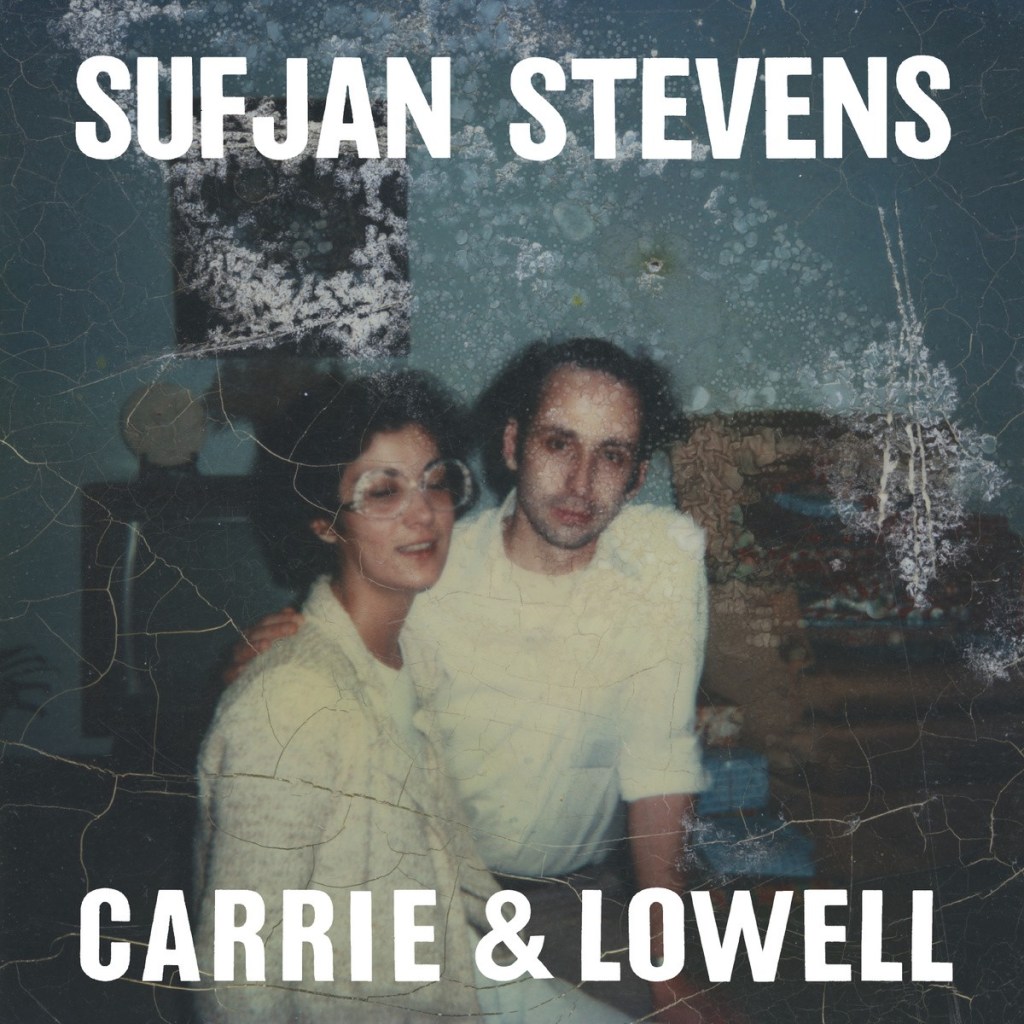
Death with Dignity / Carrie and Lowell (Review)

From Fall 2016 –

“Death with Dignity” by Sufjan Stevens – Carrie and Lowell

Carrie and Lowell’s opening song begins with the sort of melodic, cold, yet beautiful guitar picking heard throughout the album. The simplicity of the sound evokes the emotional landscape of a cold rainy drizzle. His voice undulates between a soft, controlled tone and a shrill, vibrant croon, creating a sense of being haunted – perhaps by the death of his mother, or maybe, death itself. Throughout the song, Sufjan is perplexed at where to make any sort of new beginning in his life after his experience of loss. His mother’s ghost chases him through his mind as he realizes, in the hollowest part of the song, that she will never see him ever again. The instruments blur as the song fades.

The opening of the song reminds me distinctly of the beginning of the fall of my second year. On a rainy day in the cold of my basement apartment, I’d often sit in my bed and dither awhile on my phone. As I had few friends to visit, and the
thought of engaging in small talk with my new housemates intimidated me, music and whatever else I could find on my phone and computer typically occupied my thoughts. I desired greatly to seek God, and possibly to experience love in a new, deep sense. Time had passed, and new opportunities to make things right in life and to find all the missing pieces I had lost somewhere on the road through adolescence approached. However, a creeping anxiety strangely began to work itself into all areas of my life during that time. I never fully understood this anxiety or where it came from.

After everything that happened, my only thought was that it might have been a seasonal depression of some sort…

As helpless as one is to stop winter from its inevitable chill, so too does one feel active depression trickle into your life when it comes. It is this trickle of inexplicable sadness or worry that the song so starkly reminds me of. The feeling that life is becoming cold, and I don’t know where to begin, or what to do about it. After the initial rush of such thoughts, you sometimes discover something terrible, the awareness that amidst all the considerations of your future life – of life and love and all your earthly dreams – looms death, as immense and inevitable as ever.

The Author and the Tape

From Spring 2021 –

The human being has always existed in the present, yet its entire existence is due to the past, which collectively determines the future. Is it possible that life exists just as a videotape, where the patterns on the screen are all predetermined? In this manner, like points on a wave, there is an illusion of motion – a story – though the moments are all independently existent and fixed. If you think about it, such a life could account for a continued creation ex nihilo by the one outside of the film, assuming that the film hasn’t already been finished. He sees the tape from beginning to end perfectly, while we tell ourselves stories about the past and stories about the future – the illusion of narrative and choice…

However, when you really think about this conceptualization of God, you quickly realize that He is beyond comprehension. This perhaps is a central truth in understanding God, which is that you can’t – unless you’ve been told. Why not?

Try to understand the thoughts and strategy of the smartest chess master in the world, or the smartest physicist, or the smartest philosopher, then multiply the complexity by infinity.

Or better yet, think about infinity for a while. Try to understand it. Impossible.

So why do people make assumptions about God’s character when He is, at some level, fundamentally unknowable?

The only logical answer is that God has revealed something of His nature – through either indirect or direct revelation. As finite beings, we can in theory comprehend a few facts about God – what He is, how He operates, what He likes/dislikes, and what He expects from us. If this is the case, then we probably should try our best to understand these things.

Imaginary Travel

From June 2022 –

It’s strange how you can miss something you never did.

Back in more solitary times I used to surf the internet for travel information on some of the more remote or unknown areas of the world using the U.S. State Department Travel Advisory site. One of the places I’d read about was an African state called Eritrea.

On the coast of the Red Sea, bordering Djibouti, Ethiopia, and Sudan, Eritrea stands as an enigma. Rated as the third most oppressive government regarding freedom of press, Eritrea remains quiet to the outside world much like the dictatorial states of Turkmenistan or North Korea. The human rights record is abjectly poor, yet little information is readily available regarding particulars. The population appears to be quite religious, with Christianity and Islam dominant.

In such countries life must take on a unique flavor. With contact from the outside world largely suppressed, an insular quality develops, in part because of the distinctive culture that grows from a society which mostly influences itself.

Travel to such countries fascinates me on many levels, as doing so means much more than just another beach vacation at a resort town. Instead, the whole atmosphere of the place may be completely foreign and unique. And not unique in a wholly good way, either. But nevertheless, unique. How many Americans witness such things?

In the recesses of one’s mind, you can find areas only beknownst to you – areas like my conception of Eritrea, formed on the few facts gathered from a cursory internet search for information on the country. Due to the dangers of visiting these sorts of countries, my only real chance to investigate what life is like in these foreign lands is through such private mental excursions. I used to sit up late and imagine life as an Eritrean, sitting on an overlook in the mountain regions, or walking on the shores on a hot sunny day. The scents of the town in the capital. In these mixes of fact and fiction, between me and God, I would find a sort of respite through investigation of these foreign lands in my mind. Like teleporting somewhere far away in your mind just to be a nameless traveler, watching life as it passes. In this way, the foreign gives roots to the familiar as imagination constructs a new adventure.

The strength of such images can be remarkable should one care to lose themselves. However, when the visions end, one finds his way back to his reality, which has not truly left him behind. Four walls. Time passes on.

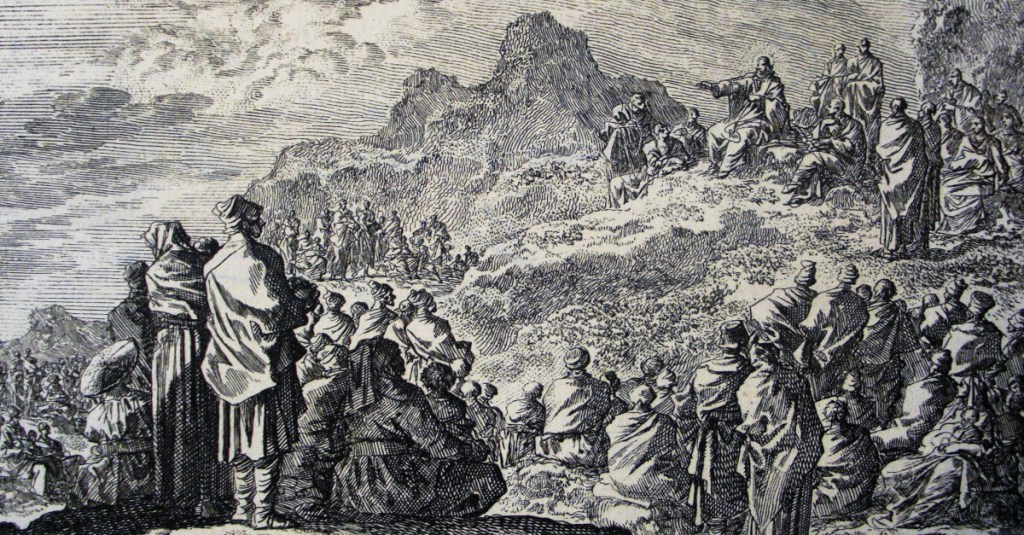
Intentions and the Sermon on the Mount

Often it is much easier not to read the actual words of Christ. His words are both colossal and confusing. Reading the words of pastors and teachers who can digest the words of Christ for us is often more comfortable, yet facing the challenge of reading the words of the Divine is healthy and arguably a necessary part of Christian living. A reason why: Christ’s teachings have a certain other-worldliness to them which can be invaluable at exposing worldly thinking on our part. When you confront the sayings of Christ directly, the discomfort we experience is often evidence of worldly roots in our thinking which make understanding His words and teachings unintuitive. While exegetical teaching can be extremely helpful and productive, it is also true that putting Christ’s teachings into “world-speak” so that we can understand them sometimes eliminates a certain beneficial soul-shocking effect His teachings have in their purest form. Anyway…

The passage below is taken from the Sermon on the Mount, which is a good example of the colossal and confusing nature of the words of Christ. [People often forget that Christ would have had relatively little spiritual training, making the depth of meaning in His words remarkable from a secular perspective. His disciples likewise would have been relatively spiritually untrained, making their telling of these teachings likewise remarkable.]

Matthew 6:1-4

“Beware of practicing your righteousness before other people in order to be seen by them, for then you will have no reward from your Father who is in heaven.

“Thus, when you give to the needy, sound no trumpet before you, as the hypocrites do in the synagogues and in the streets, that they may be praised by others. Truly, I say to you, they have received their reward. But when you give to the needy, do not let your left hand know what your right hand is doing, so that your giving may be in secret. And your Father who sees in secret will reward you.”

Contrast the above passage with the following:

Matthew 5: 13-14

13 “You are the salt of the earth, but if salt has lost its taste, how shall its saltiness be restored? It is no longer good for anything except to be thrown out and trampled under people’s feet.”

14 “You are the light of the world. A city set on a hill cannot be hidden. 15 Nor do people light a lamp and put it under a basket, but on a stand, and it gives light to all in the house. 16 In the same way, let your light shine before others, so that they may see your good works and give glory to your Father who is in heaven.”

Christ’s teachings are often extremely nuanced. In one passage, Christ tells us not to practice good works in order to be seen by others, that we might be praised by them. In the next passage, Christ tells us to let our light shine before others, in order that they may see our good works and give glory to our Father who is in heaven. There is therefore a right way and a wrong way to do good works in order to be seen by others. One glorifies God, one glorifies man. The act is the same; the motivation, different.

Good works can bring either heavenly rewards or earthly rewards, depending on intentions behind the action. If you perform good works to be seen by others, then you will get the earthly reward of praise by others. You also will be acting as do the hypocrites, those actors on the stage of life. This is perplexing – why is performing good works to be recognized by others a form of acting? Because the person performing good works in order to be recognized by others is pretending to have intentions which are pure (i.e. those which are glorifying to God and thus, pure). The hypocrite cuts out the God-glorifying component of the good work. Others may still give glory to God for the performance of the good work, which seems to still be righteous. However, for the interests of the good work performer, his reward is immediate and selfish. It is not from the Father but from man.

This specific teaching is paralleled by other portions from the Sermon on the Mount. For example…

Matthew 6: 16-17

16 “And when you fast, do not look gloomy like the hypocrites, for they disfigure their faces that their fasting may be seen by others. Truly, I say to you, they have received their reward. 17 But when you fast, anoint your head and wash your face, 18 that your fasting may not be seen by others but by your Father who is in secret. And your Father who sees in secret will reward you.”

Once again, Christ frames His teaching in terms of what the Father rewards. Here, there is a right way and wrong way to fast – one which is rewarded by the Father, and one which is not. Those who fast to be seen by others and reckoned spiritual by them already have their earthly reward. Those fasting for the Father are rewarded by Him. Again, the intention behind the action dictates whether an earthly reward or a heavenly reward is received (and remember, earthly rewards perish).

An important message from Christ’s teachings here could be that your intentions are the true measure of the status of your heart. Furthermore, changing your intentions could be a secret to changing your heart. The thinking goes like this: Clearly, the performing of good deeds in and of itself is not sufficient to bring about heavenly rewards. Thus, there is a sort of good work-performing that is fruitless to the performer. The heart and intentions behind the good works are what store up treasure in heaven, the sort of treasure given by the Father which does not perish. This means that fruitlessness and feelings of fruitlessness can be direct results (and thus indicators) of doing what is good with the wrong intentions.  To have fruitful heart-change, one must change his intentions and purposes behind his actions. Doing so may be one way to change the heart, as intentions and purposes are heart-qualities.

To elaborate on this point: There is a sort of trap we can fall into where we can live seemingly faithful lives in which we do all the right things and still live fruitlessly. Perhaps this is something personal to me, but often I feel this frustration where I feel like spiritual maturity is a lifetime away. In other words, I feel spiritually fruitless. In an age where an increasing number of people feel a sense of meaninglessness to life, it is likely that many others feel the same way – they realize that their actions, regardless of whether they are successful in bringing earthly rewards, are producing little which will be of eternal value. My thought here is that these feelings may be evidence that our intentions are off. Perhaps the current of the world has swept us along in its destructive self-centered mindset, and all the attempts at good deeds have been done in the spirit of the hypocrite. And perhaps the answer to this problem is an examination behind the intentions of our hearts in all that we do. Maybe that is one of the central ways to actually change the heart, as the good works themselves are powerless to gain us heavenly rewards. Rather, they must be paired with the right intentions and purposes to be blessed by the Father.

In other words, if life has ever felt meaningless to you, ask yourself the question, “Have I been living for myself recently?” and you will likely have your answer.

“… What about the main thing in life, all its riddles? If you want, I’ll spell it out for you right now. Do not pursue what is illusionary -property and position: all that is gained at the expense of your nerves decade after decade, and is confiscated in one fell night. Live with a steady superiority over life -don’t be afraid of misfortune, and do not yearn for happiness; it is, after all, all the same: the bitter doesn’t last forever, and the sweet never fills the cup to overflowing. It is enough if you don’t freeze in the cold and if thirst and hunger don’t claw at your insides. If your back isn’t broken, if your feet can walk, if both arms can bend, if both eyes can see, if both ears hear, then whom should you envy? And why? Our envy of others devours us most of all. Rub your eyes and purify your heart -and prize above all else in the world those who love you and who wish you well. Do not hurt them or scold them, and never part from any of them in anger; after all, you simply do not know: it may be your last act before your arrest, and that will be how you are imprinted on their memory.”


― Aleksandr Solzhenitsyn, The Gulag Archipelago 1918–1956

Postscript: Another important aspect of the teachings of the Sermon on the Mount is that they all require deep faith to be followed. All good works are to be performed specifically for the glory of God to be able to merit eternally significant rewards. The command not to be anxious likewise is predicated on God’s goodness and His sovereignty over all of life. The command to love thy enemy is predicated on the idea that God is to be emulated in His goodness to all on earth, even the evil. Thus, faith is the key which enables the Christian to be capable of following Christ’s teachings to any degree. None of Christ’s teachings are effective for the faithless individual.